Beautiful Grass: A Designer’s Real-World Embroidery Review
First Impressions: Sweet, Modern, and Surprisingly Versatile
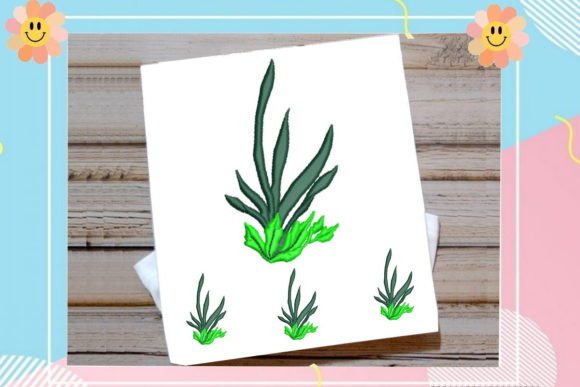
When I opened Beautiful Grass for the first time, I wasn’t expecting much beyond a decorative filler—but it surprised me. It’s not just “grass.” It’s rhythmic, slightly asymmetrical, with gentle tapering blades that lean into each other like they’re catching a breeze. The layout feels organic but intentional: no rigid symmetry, no forced uniformity. That’s what makes it work so well as a machine embroidery design—it breathes on fabric instead of sitting stiffly on top.
I immediately pictured it stitched onto a natural linen tea towel for a local boutique’s spring collection. Not as a centerpiece, but as a subtle border along the hem—soft, grounded, quietly confident. That’s Beautiful Grass’s personality: understated elegance with modern rhythm. It belongs in the Single Flowers Plants category, yes—but it’s more texture than botany. Think of it as visual punctuation, not botanical illustration.
Real Project Test: A Custom Baby Onesie That Actually Felt Thoughtful
Last week, I used Beautiful Grass on a lightweight cotton onesie for a client’s baby shower gift. No name, no date—just the design alone, placed low on the back, centered between the shoulder blades. Why there? Because it mirrored the curve of the spine, and the grass blades followed the natural drape of the fabric. It looked handmade—not “designed,” not “applied.”
The stitch execution held up beautifully: satin-stitched tips gave subtle sheen without glare; fill stitches were open enough to avoid stiffness; running-stitch accents added depth without crowding. On that thin fabric, I used tear-away stabilizer + light cut-away backing—and no puckering. That’s rare. Most grass motifs collapse or look scratchy at this scale. Beautiful Grass didn’t.
Where It Shines (and Where You’ll Want to Pause)
Beautiful Grass works exceptionally well for:
- Custom apparel: Sweatshirt cuffs, t-shirt hems, tote bag corners—even cap brims if you keep the width under 3”.
- Home decor accents: Pillow covers (especially linen or canvas), kitchen towels, blanket hems, and nursery wall hangings.
- Personalized gifts: As a quiet complement to monograms or names—not competing, enhancing.
- Craft business items: Small shop merchandise where cohesion matters—think matching aprons and tea towels for a bakery’s staff line.
But be thoughtful with:
- Textured fabrics: On heavy terry cloth or bouclé, test first—the fine tips may disappear. A slight increase in stitch length helps.
- Stretchy knits: Use cut-away stabilizer + basting spray. Don’t skip the test run—even gentle curves need anchoring.
- Dark or dense backgrounds: The design relies on thread contrast. On navy or charcoal, avoid pale mint or cream threads unless you want subtlety over impact.
- Tiny hoop sizes: Below 4” x 4”, details soften. If your project demands crispness at 2.5”, check how the inner blade spacing holds up before committing.
What It Does for Your Brand—and Your Buyers
As an Etsy seller and small shop owner, I pay attention to how a design affects perceived value. Beautiful Grass elevates a plain item without shouting. A customer buying a handmade embroidered pillow cover doesn’t just see “grass”—they feel intention, care, and quiet sophistication. That translates directly to trust, repeat orders, and word-of-mouth referrals.
It also plays well across platforms. I used it in a printable mockup for an Instagram carousel—light background, neutral thread—and engagement spiked. Why? Because it looked like something real people would choose for their own homes—not a stock vector, not a clipart afterthought. That authenticity is gold for digital embroidery file sellers and creative entrepreneurs building cohesive design assets.
Practical Designer Notes You’ll Actually Use
Before stitching Beautiful Grass into your next embroidery project, do these five things:
- Test on scrap fabric—same weight, same weave, same stabilizer combo you’ll use on the final piece.
- Check thread color contrast in both natural and artificial light. What reads as soft sage indoors might vanish under fluorescent store lighting.
- Review stitch density—not just for hooping, but for washability. Dense fills hold up better on baby items; looser fills breathe better on summer tees.
- Confirm hoop size compatibility before listing it as part of a commercial embroidery bundle. Some versions scale poorly below 3.5”.
- Inspect small details in black-and-white mockups. If the negative space disappears in grayscale, reconsider placement or thread choice.
And one non-negotiable: Always verify licensing terms. Since Beautiful Grass is marketed as a digital embroidery file, confirm whether it permits resale of finished products—or if it’s limited to personal use. Many craft businesses get tripped up here. When in doubt, contact the designer directly. Clarity now saves headaches later.
Final Thought: It’s Not Just Grass—It’s Context
I’ve stitched hundreds of floral and botanical designs, and most fade into the background. Beautiful Grass doesn’t. It settles in—like something that was always meant to be there. It’s the kind of embroidery design that makes a sweatshirt feel curated, a baby blanket feel tender, and a holiday gift feel quietly meaningful.
Use it where you want calm confidence—not flash. Where you want handmade warmth—not digital perfection. And where you want customers to pause, smile, and say, “That’s exactly what this needed.”