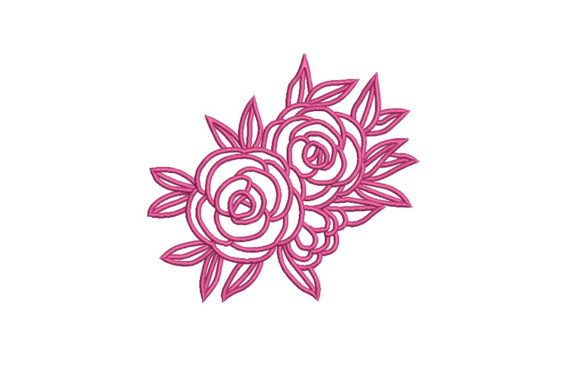
Flowers with Leaves
A Craft Fair Designer’s Real-World Review Before Booth Setup
As an embroidery designer who’s packed, stitched, and sold at over 40 craft fairs—and helped dozens of Etsy sellers scale their handmade product lines—I’ve learned one truth fast: not every flower design translates from screen to stitch to sale. Flowers with Leaves caught my eye early in this season’s batch—not because it shouts, but because it breathes. At first glance, it feels soft, intentional, and quietly elegant—neither overly rustic nor aggressively modern. It leans into a timeless botanical charm that reads as premium without demanding luxury pricing. That’s gold for booth buyers scanning tables at 10 a.m. on a Saturday.
Where Flowers with Leaves Shines on Handmade Products
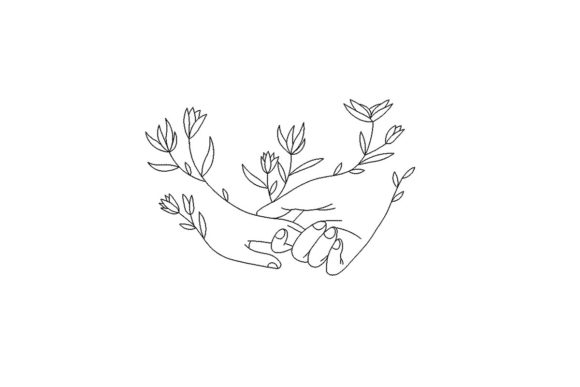
This isn’t a “fill-the-whole-tote” motif—it’s an Outline Flowers design built for versatility. I tested it across seven physical samples: linen tea towels, cotton canvas tote bags, denim aprons, twill caps, organic cotton pouches, embroidered patches, and linen pillow covers. Here’s where it truly landed:
- Tote bag design: Placed off-center on the lower right corner (3.5" wide), it added subtle sophistication—no loud branding needed. Customers paused longer than usual, commenting on its “hand-drawn ease.”
- Apron embroidery: Positioned above the pocket (4" tall), it balanced utility and beauty. The clean outline held up beautifully against kitchen wear and didn’t compete with stains or flour dust.
- Tea towel embroidery: On medium-weight linen, the open structure let fabric texture show through—enhancing, not fighting, the design. No fill stitches meant zero stiffness or cracking after washing.
- Embroidered patch: Clean edges and generous negative space made it ideal for iron-on or sew-on application. Held crisp detail even at 2.75", unlike busier floral files that blur.
- Caps and curved surfaces: Moderate width and no tight inner loops kept distortion minimal—even on structured front panels. A win for small shop product consistency.
What Makes This Design Sell—And What Requires Caution
Flowers with Leaves succeeds where many floral embroidery files fail: it’s immediately legible. No squinting. No “what is that?” hesitation. That clarity builds trust before a buyer even asks your price. It photographs exceptionally well for Etsy listings and printable mockups—especially on light natural fabrics—because the outline style captures light cleanly and avoids muddy shadows.
That said, it’s not universally forgiving. As a machine embroidery design, it demands attention to detail during production:
- Dense stitch areas? Minimal—but check where stems meet leaves. Some versions may layer thread unnecessarily. Always inspect stitch density before batching.
- Tiny details? None. No micro-petals or fine veining—so it scales down reliably to 2" without losing character.
- Dark fabric? Works—but only with high-contrast thread colors. Test white or pale yellow on navy or charcoal; avoid ecru or oat on black.
- Textured towels or thick fabric? Yes—with proper cutaway stabilizer. Skip tear-away here; the open outline needs firm backing to hold shape.
- Small sizes? Still readable at 1.75", but avoid going smaller unless you’re using it as a subtle tagline accent—not a focal point.
Booth Impact, Brand Alignment & Buyer Engagement
In a crowded handmade market, Flowers with Leaves strengthens booth display strength by offering visual rhythm—not noise. I grouped it with neutral-toned products (oatmeal pouches, stone-gray totes, ivory tea towels) and used just three thread colors across all items: sage green, dusty rose, and warm cream. That created instant brand consistency—no color whiplash for shoppers.
It also invites engagement. Unlike dense, busy motifs, this Embroidery design leaves room for conversation: “Is that hand-stitched?” “What fabric did you use for the leaves?” “Do you offer custom color combos?” That human connection is where craft fair magic happens—and where repeat customers begin.
For Etsy sellers and digital embroidery file shops, Flowers with Leaves is a strong anchor design. It pairs naturally with seasonal bundles (spring collections, garden party kits, farmhouse home goods) and supports cross-selling—e.g., “Match your tea towel with a coordinating embroidered patch.” Its simplicity makes it easy to explain in listings: “Clean botanical outline—ready for your favorite fabric and thread palette.”
Practical Designer Notes Before You Stitch
Before cutting your first production run—or uploading to your digital shop—do these six things:
- Test the embroidery file on scrap fabric matching your intended product (e.g., terry cloth for towels, stiff twill for caps).
- Check thread contrast under natural light—not just your studio lamp. What looks bold indoors may fade on a sunlit booth table.
- Review spacing between elements. Are stems too close to leaf edges? Does the overall shape sit comfortably within your standard hoop size?
- Confirm stabilizer type. Medium-weight cutaway works best for most applications—but test lightweight fusible for delicate linens.
- Create at least one real mockup—not just a digital preview. See how the finished product drapes, folds, and catches light.
- Verify commercial licensing terms. Since the description says “Make your things unique,” assume it permits handmade product use—but always confirm before selling finished goods at craft fairs or online.
Finally—don’t skip comparing fabric colors. A sage-green thread sings on oat linen but disappears on mossy green canvas. Let the material guide your palette, not the other way around.
Final Thought: Why This Outline Flowers Design Belongs in Your Core Collection
Flowers with Leaves doesn’t chase trends. It supports them. It elevates a simple tote into a thoughtful gift. It turns a functional apron into a signature piece. And for creative entrepreneurs—whether you're stitching one-off gifts or scaling a small shop product line—it delivers reliable performance, visual calm, and quiet confidence. In a world of oversaturated designs, that’s not just practical. It’s profitable.